
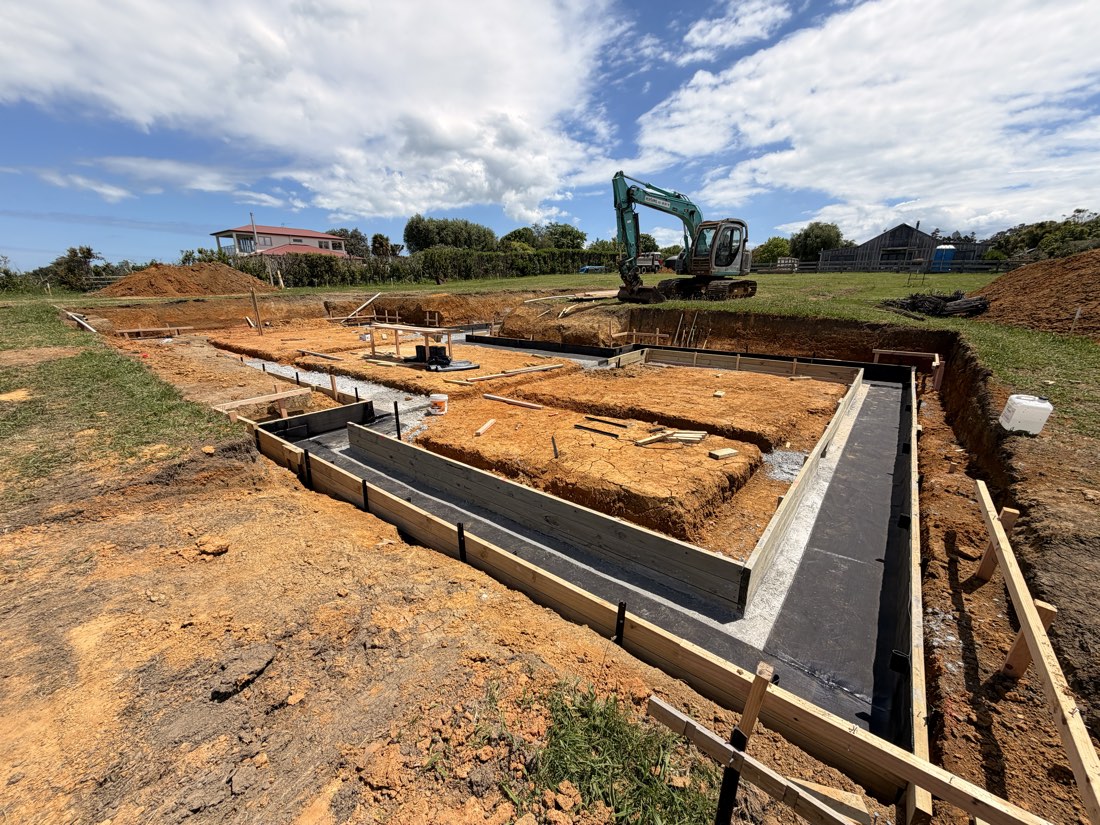
Tanking Membrane Auckland
We protect basements, retaining walls, lift pits and underground structures from groundwater and hydrostatic pressure, built to New Zealand Building Code standards.
Why this system works
- Prevents dampness, mould and structural deterioration in below-ground spaces
- Built for Auckland's high rainfall, over 1,200mm a year
- Addresses clay-heavy soils and rising water tables common in the region
- Ensures legal Building Code compliance for habitable basement spaces
What we install
Torch-on bituminous membrane
For external tanking.
Liquid-applied membrane
For complex geometries.
Sheet membrane systems
For large retaining walls.
Protection and drainage boards
To manage groundwater pressure.
The details
- Lifespan
- 50+ years with BRANZ-appraised systems
How we install it
Site inspection and groundwater assessment
Excavation and substrate preparation
Primer and membrane application to spec
Protection board and drainage layer installation
Final inspection and Records of Work filed with council
Protecting Auckland’s basements, retaining walls, lift pits and underground structures from groundwater and hydrostatic pressure. NZ Building Code compliant. Licensed Building Practitioner #BP181755.
What Is Tanking Membrane Waterproofing?
Tanking is the application of a waterproof membrane system to below-ground structures, basements, retaining walls, lift pits, underground car parks and any building element that sits below the natural ground level. Its purpose is to create a continuous waterproof barrier that prevents groundwater, soil moisture and hydrostatic pressure from penetrating the structure.
In Auckland, tanking is particularly critical due to the region’s high annual rainfall (1,200mm+), clay-heavy soils that retain moisture, and rising water tables in many suburbs. Without effective tanking, below-ground spaces are susceptible to dampness, mould, structural deterioration and in severe cases, flooding during heavy rainfall events.
The New Zealand Building Code (Clause E2, External Moisture) mandates that all building elements in contact with the ground must be protected from moisture ingress. For habitable basements and living spaces below ground level, a tanking membrane system is not optional, it is a legal requirement. As a Licensed Building Practitioner, we ensure every tanking installation meets or exceeds these code requirements.
Tanking vs Roof and Deck Waterproofing
Tanking is a below-ground problem. Water is pushing in from the soil and the water table, not falling from above, so it needs a system designed to resist that pressure rather than shed rainfall. That is a different job from roof waterproofing, where systems like TPO and Butynol are built to handle water arriving from above and draining away.
If a property needs both, a basement or retaining wall below and a roof or deck above, each gets the system built for that direction of water, not one product doing a job it was never designed for.
When Is Tanking Membrane Required?
Tanking is essential for any structure with below-ground elements exposed to soil moisture or groundwater
Basements & Cellars
Any habitable space below ground level requires tanking to prevent moisture penetration through walls and floors. This includes home offices, media rooms, bedrooms, and storage areas in basement conversions.
Retaining Walls
Earth-retaining walls that have living spaces, garages or storage behind them must be tanked on the earth-facing side to prevent water from migrating through the concrete or masonry into the building.
Below-Slab Waterproofing
Concrete floor slabs that sit at or below the water table level need tanking to prevent hydrostatic pressure from forcing groundwater up through the concrete and into the building.
Underground Car Parks
Commercial and residential underground parking structures require comprehensive tanking systems to manage groundwater ingress, protect the structural reinforcement from corrosion, and maintain safe, dry conditions.
Lift Pits & Service Ducts
Lift pits and below-ground service ducts are particularly vulnerable to water ingress and require specialist tanking to protect critical electrical and mechanical equipment from moisture damage.
Planter Boxes & Garden Beds
Built-in planter boxes and garden beds on structures need tanking to prevent irrigated water and soil moisture from migrating into the building elements below or adjacent to them.
Tanking Systems We Install
We select the tanking membrane system based on each project’s specific requirements, the depth below ground, groundwater levels, soil type, access conditions and whether the application is external (positive-side) or internal (negative-side). All systems we use are BRANZ-appraised and compliant with the NZ Building Code.
Torch-On Bituminous Membrane
Our most commonly used external tanking system, the same torch-on technique we use above ground, adapted for the job. Modified bitumen sheets are torch-applied to the external face of retaining walls and basement walls, providing a robust, self-healing waterproof layer that resists root penetration and chemical attack from soil.
Liquid Applied Membrane
Ideal for complex geometries, pipe penetrations and irregular surfaces where sheet membranes are difficult to detail. The liquid membrane conforms to any shape and cures to form a seamless, fully bonded waterproof coating.
Sheet Membrane Systems
Self-adhesive or mechanically fixed sheet membranes for large, flat retaining wall applications. These systems provide consistent thickness and reliable performance across extensive areas.
Protection & Drainage Board
A critical component of any tanking system. Protection boards shield the membrane from backfill damage, while drainage boards channel groundwater away from the structure to reduce hydrostatic pressure on the membrane.
NZ Building Code Requirements for Tanking
Below-ground waterproofing is one of the most critical elements in any building project. The NZ Building Code sets strict requirements for tanking that must be met to obtain a Code Compliance Certificate.
External Moisture
Building elements in contact with the ground must prevent moisture from entering the building
Durability
Tanking systems must achieve minimum 50-year durability for primary structure protection
Surface Water
Effective drainage must be integrated to manage groundwater and surface water around below-ground structures
Licensed Building Practitioner
LBP #BP181755 with Roofing R4 & R5 endorsements. Tanking membrane installation is restricted building work under the Building Act 2004 and must be carried out by a licensed practitioner.
BRANZ-Appraised Systems
We exclusively use BRANZ-appraised tanking membrane systems that have been independently tested and verified for performance in New Zealand conditions.
What Drives the Cost of Tanking
Tanking is the hardest waterproofing to price without seeing the site, and it is also the one where getting it wrong is most expensive, because the membrane ends up buried behind concrete and soil where nobody can reach it again.
Whether the work is external or remedial internal. Tanking applied to the outside face before backfill is the straightforward case. Remedial internal tanking on a basement that is already leaking is a different problem: the water is pushing against the membrane rather than being held off it, the substrate is usually damp, and the preparation is far more involved.
Groundwater pressure. A retaining wall shedding surface water and a basement wall sitting below the water table need different systems. Hydrostatic pressure changes the specification, the detailing and often whether drainage and protection board are required alongside the membrane.
Excavation and access. On remediation, reaching the outside face may mean excavating, and that brings in shoring, spoil, plant access and reinstatement. Sometimes there is no room to excavate at all, which forces an internal solution that costs more for a worse position.
Detailing at penetrations and junctions. Service penetrations, construction joints, wall-to-slab junctions and corners are where below-ground systems fail. The area of flat wall is quick. These are not.
Drainage and protection. Drainage layers, protection boards and cavity drain systems are frequently needed to stop the membrane being damaged during backfill and to relieve water pressure. Whether they are required is a site decision, not a catalogue one.
Programme. Tanking has to happen at a specific point in the build, before backfill or before the slab. Being brought in late, when access has been closed off by other trades, changes the method and the cost.
Every tanking project is quoted from an on-site assessment of the ground conditions, the water, the access and the detailing required. See what waterproofing costs in Auckland for how we build a quote.
What Auckland Clients Say
Trusted by homeowners and builders across Auckland, here is what they say about our work
“Your Subbie did an excellent job with our TPO roof installation. Professional, on time, and the quality is outstanding. We had tried two other companies before and neither could solve our recurring leaks, Matt fixed it first go.”
Sarah Thompson
Devonport, Auckland
January 2026
“Matt and his team transformed our leaking deck with their Dec-K-Ing system. No more water damage, and it looks fantastic. Great communication throughout the whole project.”
Mike Johnson
Grey Lynn, Auckland
February 2026
“We regularly use Your Subbie for waterproofing on our projects. Their expertise with Butynol and torch-on systems is top-notch, reliable, clean work every time.”
David Lee
Remuera, Auckland
March 2026
Tanking Membrane FAQ
What is tanking and when is it needed?
Tanking is the process of applying a waterproof membrane to below-ground structures to prevent water ingress from surrounding soil and groundwater. It is required for any habitable basement, underground car park, retaining wall with living spaces behind it, lift pits, and below-slab areas where hydrostatic pressure from groundwater could force water through the concrete.
What tanking membrane systems do you use?
We use BRANZ-appraised tanking membrane systems that comply with the New Zealand Building Code. Our primary systems include bituminous-based torch-on membranes for external tanking, liquid-applied membranes for complex geometries, and sheet membrane systems for large retaining wall applications. The specific system is selected based on the project requirements, soil conditions and hydrostatic pressure levels.
Is tanking membrane required by the NZ Building Code?
Yes. The New Zealand Building Code Clause E2 (External Moisture) requires that all building elements in contact with the ground must be protected from moisture penetration. For habitable basements and below-ground spaces, a properly designed and installed tanking membrane system is essential for compliance. As a Licensed Building Practitioner, we ensure every tanking installation meets code requirements.
Can you waterproof an existing basement that is leaking?
Yes, we regularly remediate leaking basements in Auckland. Depending on the access available and the cause of the water ingress, we can apply internal tanking systems, inject waterproof resins into the concrete, or excavate externally to apply a new tanking membrane. We assess each situation individually and recommend the most effective and cost-efficient solution.
How much does tanking membrane cost in Auckland?
There is no useful rate per square metre for tanking, because the variables outweigh the area. A retaining wall tanked externally before backfill is the simplest and cheapest case. A leaking basement remediated internally, where the water is pushing against the membrane and access is restricted, sits at the other end and can be several times the cost for the same area. Groundwater pressure, excavation, drainage layers, protection boards and the detailing at construction joints and service penetrations all move the number. We quote from an on-site assessment of the ground conditions and access, itemised so you can see what each part covers.
How long does tanking membrane last?
A professionally installed tanking membrane system is designed to last the lifetime of the building, typically 50+ years. The membrane is protected from UV exposure and mechanical damage by the surrounding soil and concrete, which means degradation is minimal. We use only BRANZ-appraised systems that meet the NZ Building Code’s minimum 50-year durability requirement for primary building elements.
Ready to talk about tanking membrane?
Get a free assessment and quote, no obligation.